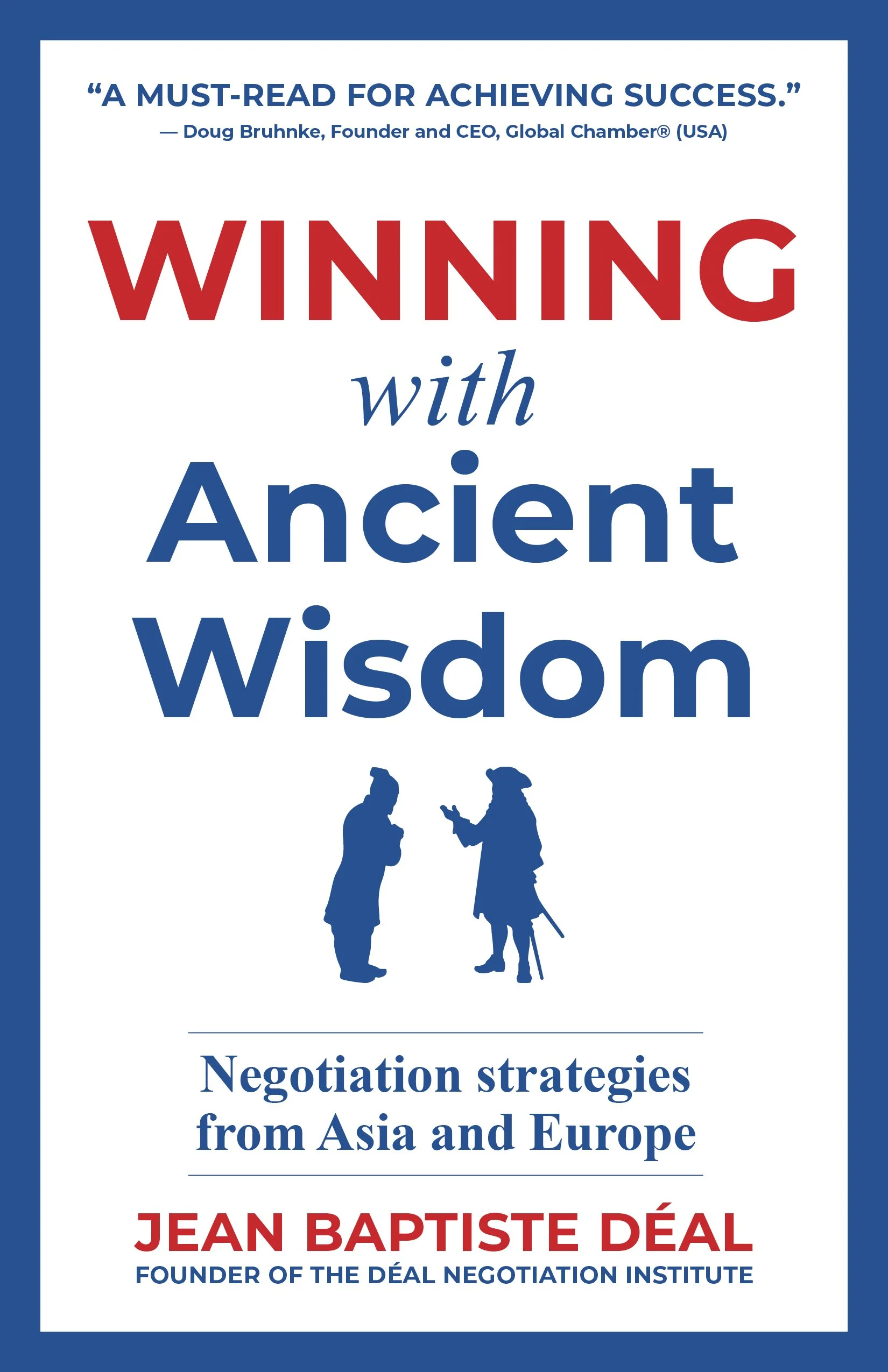
Winning With Ancient Wisdom
Negotiation Strategies From Asia and Europe
Intro
Throughout history, powerful negotiation strategies have been passed down from generation to generation. In Asia, this wisdom is reflected in strategic traditions such as the 36 Chinese Stratagems; in Europe, similar lessons appear in fables and stories that reveal enduring truths about judgment, influence, and human behaviour.
This book brings these worlds together in a practical and accessible way for today’s leaders, professionals, entrepreneurs, and internationally minded readers. It is designed to help you think more clearly, negotiate more strategically, and act with greater confidence in a complex and interconnected world.
Why this book
Most people enter a negotiation with too little preparation and too little clarity. This book shows why successful negotiators do more than react in the moment: they prepare thoughtfully, define their objectives, anticipate the other side, and choose their strategy with intention.
Rather than offering vague motivational advice, Winning With Ancient Wisdom translates memorable stories and time-tested stratagems into clear, actionable negotiation moves. The goal is not to negotiate more aggressively, but to negotiate more wisely.
What you will learn
How to decode ancient stories and stratagems into practical negotiation tools.
How to gain more clarity, control, and influence in important discussions.
How to anticipate your counterpart’s tactics and avoid common pitfalls.
How to identify hidden opportunities and strengthen your reputation over time.
How to adapt your approach across Asia, Europe, and global business environments.
Who it is for
This book is for leaders, founders, managers, professionals, and students who want to improve the way they negotiate in business and in life. It is especially relevant for readers working across cultures, preparing for important discussions, or looking for a more thoughtful and strategic approach to influence.
Whether you negotiate contracts, partnerships, internal decisions, career opportunities, or everyday trade-offs, the principles in this book are designed to help you prepare better and act more effectively.
A practical guide to modern negotiation inspired by time-tested strategies from Asia and Europe. Learn how to prepare with clarity, anticipate moves, avoid common traps, and influence outcomes with greater confidence across cultures and contexts.

About the author
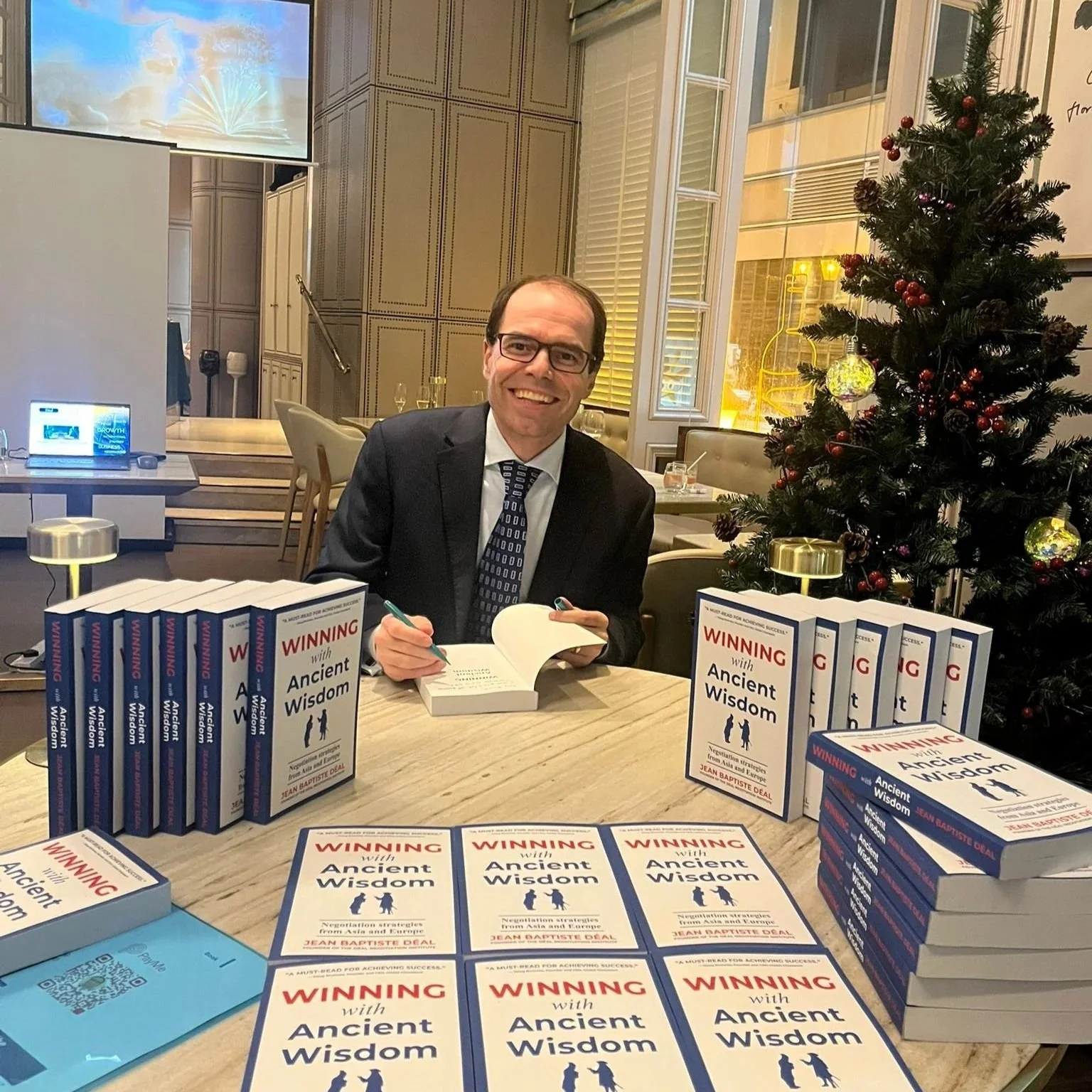
Jean-Baptiste Déal is the founder of the Déal Negotiation Institute and the author of Winning With Ancient Wisdom. With over 20 years of professional experience, he has supported a wide range of stakeholders, including investors, vendors, buyers, and government agencies, always with a focus on achieving stronger outcomes across cultures.
Born and raised in France and now based in Hong Kong, he brings together European and Asian perspectives on negotiation, strategy, and business relationships. He studied Mandarin at Beijing Language and Culture University, earned an MBA from the Hong Kong University of Science and Technology, and completed Harvard’s Program on Negotiation.
Available in eBook, paperback, and hardcover. The book is available through major booksellers and platforms in multiple formats.
What readers say
“Winning With Ancient Wisdom equips readers with the cultural fluency and strategic savvy needed to succeed anywhere—from boardrooms in Beijing to marketplaces in Milan, and beyond.”
“This guide is an essential negotiation tool for success in global negotiation and dialogue, offering readers a pathway to improve negotiation skills by gaining clarity, control, and influence. It’s a must-read for mastering business in Asia, North America, and beyond.”
“I highly recommend this guide to anyone who seeks to master negotiation not just as a skill, but as a way of thinking.”
“Mastering the 36 negotiation strategies is essential to understand how business is conducted in Asia.”
“This innovative approach to bridging Eastern and Western negotiation strategies is truly inspiring. These two very different yet complementary systems of thinking are essential tools for everyone who wants to get things done.”